10 Qvidian Alternatives Compared Fairly (2026 Buyer’s Guide)

Article written by
Aparna Rajendran

INSIDE THE ARTICLE
SHARE THIS ARTICLE
Summary
As RFP volumes grow and AI reshapes proposal workflows, many teams are rethinking legacy tools like Qvidian. This guide compares the top Qvidian alternatives in 2026, breaking down real strengths, trade-offs, pricing models, and AI capabilities, so sales, presales, and proposal teams can choose the RFP software that actually fits how they work.
For years, Upland Qvidian has been the default choice for enterprise proposal teams. It’s trusted. It’s proven. And yes, it’s powerful. But here’s the thing. The way teams respond to RFPs has fundamentally changed.
AI is no longer just an option. Collaboration no longer happens in a single tool. And speed, accuracy, and governance now have to coexist without killing momentum. That’s why more teams are actively evaluating Qvidian alternatives, not because Qvidian is broken, but because the market has moved.
This guide breaks down 10 serious alternatives to Qvidian, what they’re actually good at, and when each one makes sense.
Why teams are rethinking Qvidian in the first place
Qvidian excels at structured, document-heavy proposal workflows. But many modern teams struggle with:
- Rigid implementations that take months to fully adopt
- Heavy reliance on static content libraries
- Limited transparency into AI-generated responses
- High seat-based pricing that discourages collaboration
- Workflow friction outside the tool (Slack, Teams, SMEs, legal reviews)
What this really means is simple: control alone is no longer enough. Teams want speed, clarity, and confidence, without losing governance.
RFPs slowing down your sales cycle? See how AI-powered responses stay fast and review-ready.
Top 10 Qvidian Alternatives
Each tool below has a clear breakdown so you can scan, compare, and decide without mental gymnastics.
1. SparrowGenie
G2 rating: 4.5/5
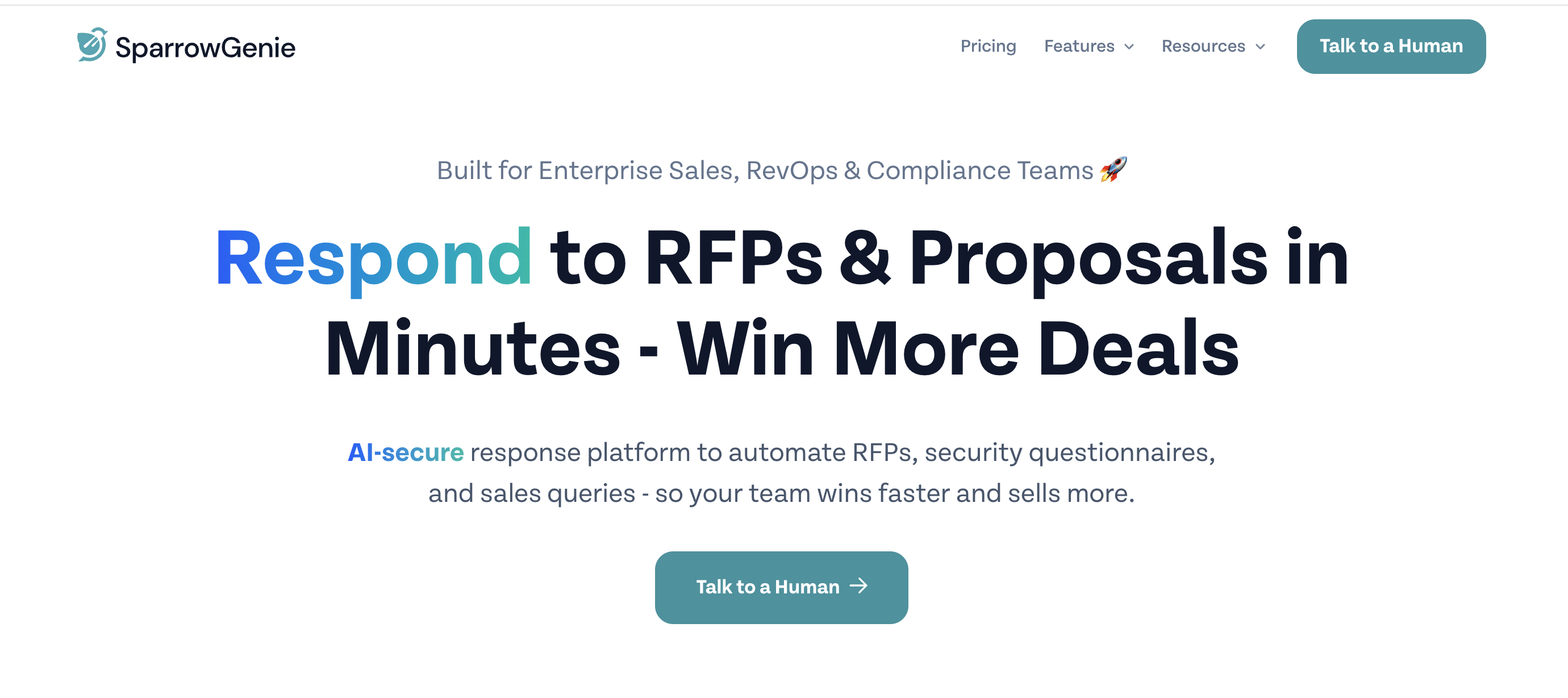
SparrowGenie is an AI-first RFP and proposal automation platform built specifically for modern revenue teams handling complex, high-stakes bids. Unlike legacy tools that retrofit AI onto document workflows, SparrowGenie is designed around confidence, governance, and speed working together.
Key capabilities
A few of the key capabilities in SparrowGenie include:
- Dual RFP mapping: fast AI mapping or controlled contextual mapping
- Confidence-scored answers with clear review signals
- Centralized Knowledge Hub with governed sources
- Embedded presales assistant in Slack and Microsoft Teams
- Real-time ownership, progress tracking, and diagnostics
Where it stands out
The confidence-scoring model changes how teams review RFPs. Reviewers focus only on where risk exists, not on every answer. Embedded collaboration reduces back-and-forth across tools.
Pros
These are the areas where the platform clearly delivers value for modern RFP and proposal teams. If these strengths align with your workflow priorities, the tool can drive meaningful efficiency gains.
- Transparent AI with confidence indicators
- Strong cross-functional collaboration model
- Designed for complex enterprise RFPs
- Modern UX with fast deployment
Taken together, these advantages make the platform especially effective in fast-moving, high-stakes deal environments. Teams prioritizing speed, clarity, and collaboration will benefit the most from these strengths.
Cons
No platform is without trade-offs, and these limitations are important to consider before committing. Understanding them early helps set realistic expectations during evaluation and rollout.
- Newer platform compared to legacy vendors
- Smaller public review footprint than incumbents
For some teams, these gaps may be minor or temporary; for others, they could be decision-defining. Weigh them against your scale, maturity, and risk tolerance to determine overall fit.
Best fit
Mid-market to enterprise teams that want AI speed without losing control, especially sales, presales, legal, and security teams working together on large deals.
Check Out SparrowGenie with a live demo.
2. Loopio
Source: Loopio
G2 rating: 4.6/5
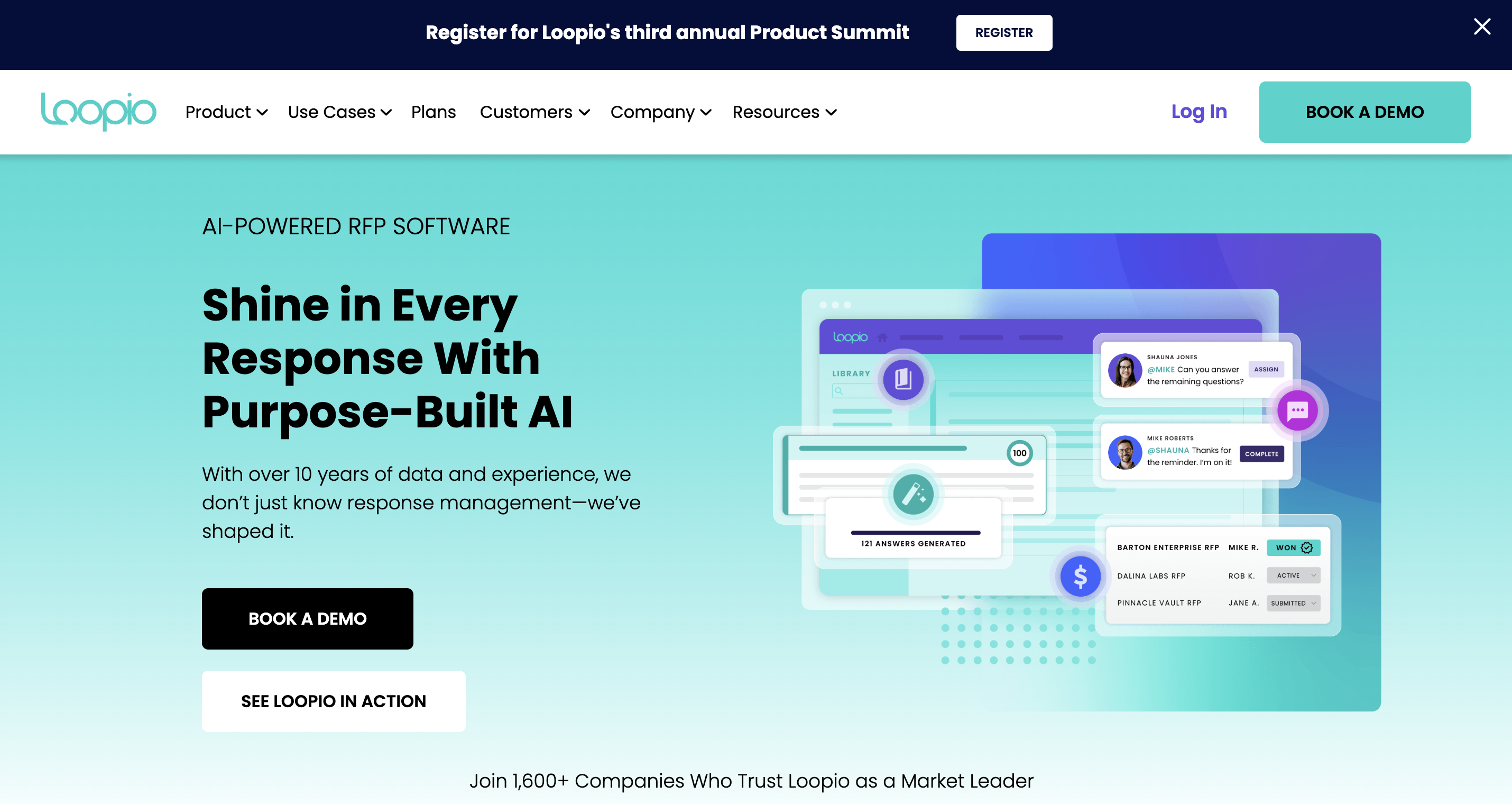
Loopio is a well-established RFP response platform known for structured content reuse and enterprise governance. It is one of the most commonly evaluated alternatives to Qvidian.
Key capabilities
These capabilities define what the platform enables teams to do day to day across RFP and proposal workflows.
- Centralized content library with ownership and expiration
- AI-assisted answer recommendations
- Portal-based RFP automation for web questionnaires
- Strong CRM and productivity integrations
- Multi-step approval workflows
Together, they form the functional foundation that supports scale, consistency, and collaboration.
Where it stands out
Loopio’s portal automation is a major advantage as more RFPs move into procurement portals instead of documents.
Pros
These strengths represent the platform’s most reliable and well-proven advantages in real-world use.
- Mature enterprise governance
- Excellent content lifecycle controls
- Strong compliance support
- Proven at scale
When aligned with your operating model, these benefits can justify the investment.
Cons
These are the primary limitations teams should factor into evaluation and budgeting decisions.
- Seat-based pricing becomes expensive quickly
- Requires ongoing content maintenance
- AI output can feel inconsistent at times
Depending on scale and maturity, these trade-offs may or may not outweigh the platform’s strengths.
Best fit
Large, regulated enterprises handling high RFP volumes with dedicated proposal teams and budgets for governance-heavy tools.
3. Responsive
Source: Responsive
G2 rating: 4.5 / 5
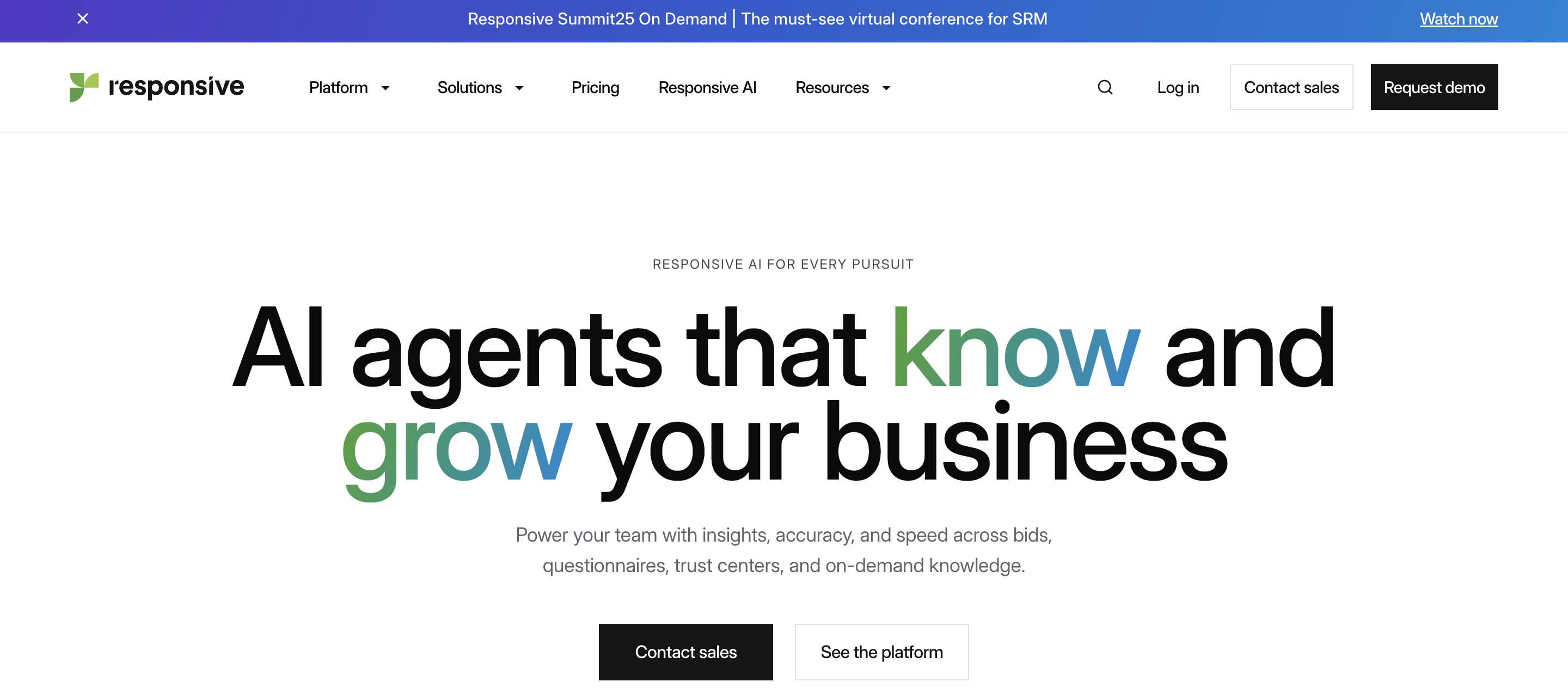
Responsive (formerly RFPIO) positions itself as a Strategic Response Management platform, covering RFPs, RFIs, DDQs, and security questionnaires.
Key capabilities
These capabilities support structured, large-scale RFP and questionnaire workflows across enterprise teams.
- Question-level response management
- LookUp search across past responses
- AI-driven answer recommendations
- Deep integrations with CRM and security tools
- Enterprise-grade access controls
Together, they enable consistency, control, and repeatability across complex response processes.
Where it stands out
Responsive offers one of the widest integration ecosystems among Qvidian alternatives.
Pros
These strengths reflect the platform’s maturity and suitability for large, regulated organizations.
- Very strong enterprise feature depth
- Mature workflows and permissions
- Broad integration coverage
- Reliable for large-scale operations
For teams built to operate at scale, these advantages deliver dependable performance.
Cons
These limitations are most noticeable during procurement, onboarding, and early adoption.
- Pricing is opaque and sales-led
- Steeper learning curve
- Can feel heavy for smaller teams
Smaller or leaner teams may find these trade-offs harder to justify.
Best fit
Large organizations prioritizing structure, integrations, and auditability over flexibility or speed.
4. PandaDoc
Source: PandaDoc
G2 rating: 4.2/5
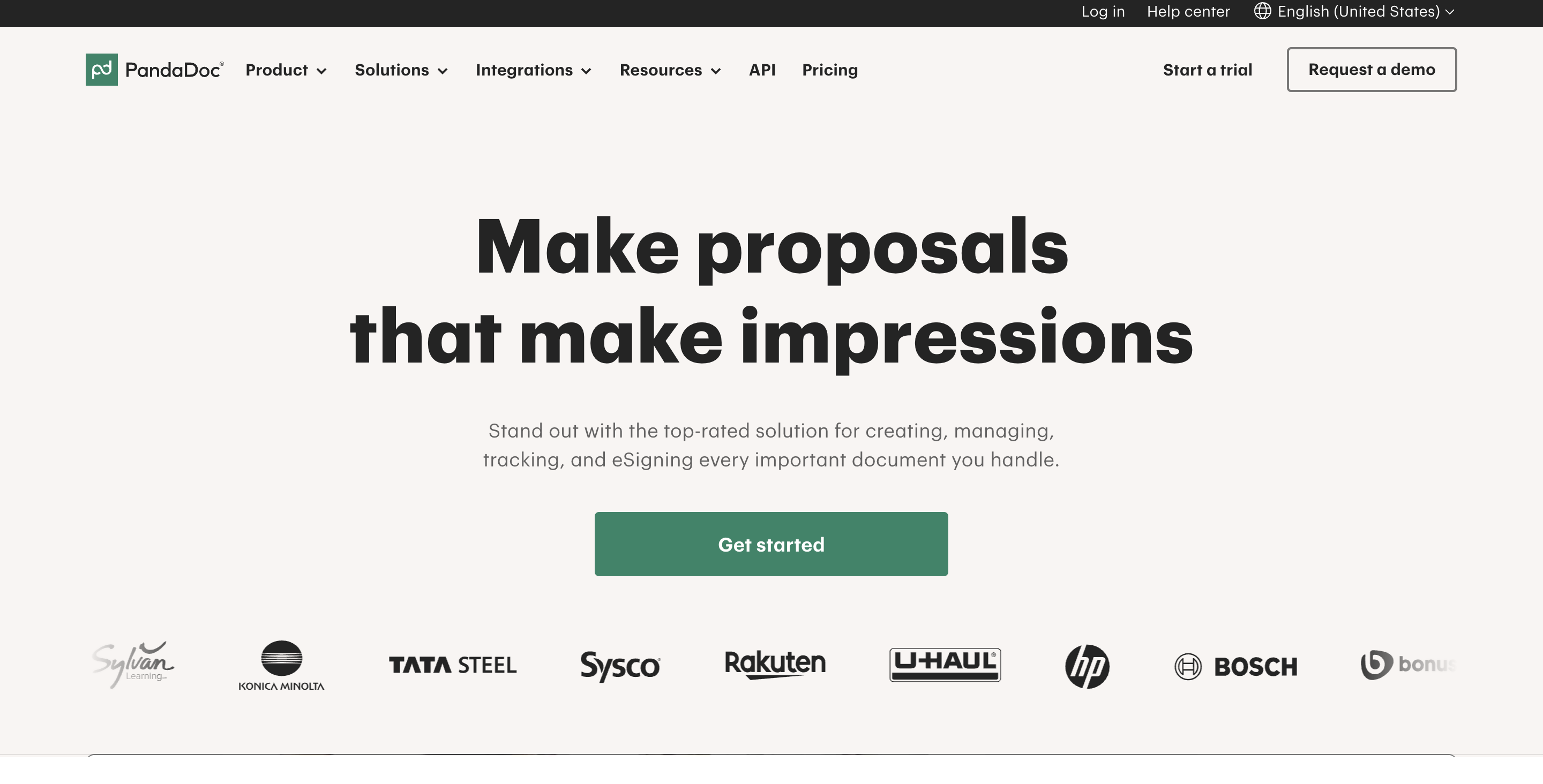
PandaDoc is a sales proposal and document automation platform, not a traditional RFP tool, but it is often considered by teams moving away from heavyweight systems.
Key capabilities
These capabilities are designed to help sales teams create, send, and close proposals quickly.
- Visual proposal builder with templates
- Engagement tracking and analytics
- Built-in e-signatures and payments
- CRM integrations
- Content blocks and variables
Together, they optimize the end-to-end proposal experience rather than formal RFP management.
Where it stands out
PandaDoc excels at closing deals, not managing complex RFPs.
Pros
These strengths make the platform especially appealing for fast-moving sales teams.
- Fast proposal creation
- Strong buyer engagement insights
- Transparent pricing
- Easy to adopt
Teams prioritizing speed and buyer engagement will benefit the most from these advantages.
Cons
These limitations become important when proposals move into regulated or RFP-heavy territory.
- Not built for complex RFP workflows
- Limited governance and compliance
- Weak for question-heavy responses
Teams with complex compliance or questionnaire needs may find the platform insufficient.
G2 rating
4.7 / 5
Best fit
Sales-led teams with low RFP volume focused on proposal speed and presentation.
Too many stakeholders? Too many versions?
Centralize RFP collaboration without adding process overhead.
5. RocketDocs

Source: RocketDocs
RocketDocs is a document assembly platform designed to generate large, highly formatted proposals from approved content blocks.
Key capabilities
These capabilities focus on assembling large, structured proposals using approved content and CRM data.
- CRM-driven document assembly
- Brand-compliant templates
- Content modules with version control
- Workflow approvals
- Enterprise permissions
Together, they support consistency, control, and efficiency in document-centric proposal workflows.
Where it stands out
Best suited for document-heavy proposal generation, not granular RFP Q&A.
Pros
These strengths highlight the platform’s reliability in enterprise proposal production.
- Excellent formatting consistency
- Strong CRM data pull
- Enterprise-ready governance
- Scales well for large documents
Organizations producing large, highly formatted documents will benefit most from these capabilities.
Cons
These limitations are important to consider for teams evaluating AI-driven RFP automation.
- Limited question-level RFP handling
- Custom pricing only
- Less AI depth than newer tools
Teams requiring deeper AI assistance or granular Q&A workflows may need additional tools.
Best fit
Enterprises producing highly formatted proposals where document assembly is the bottleneck.
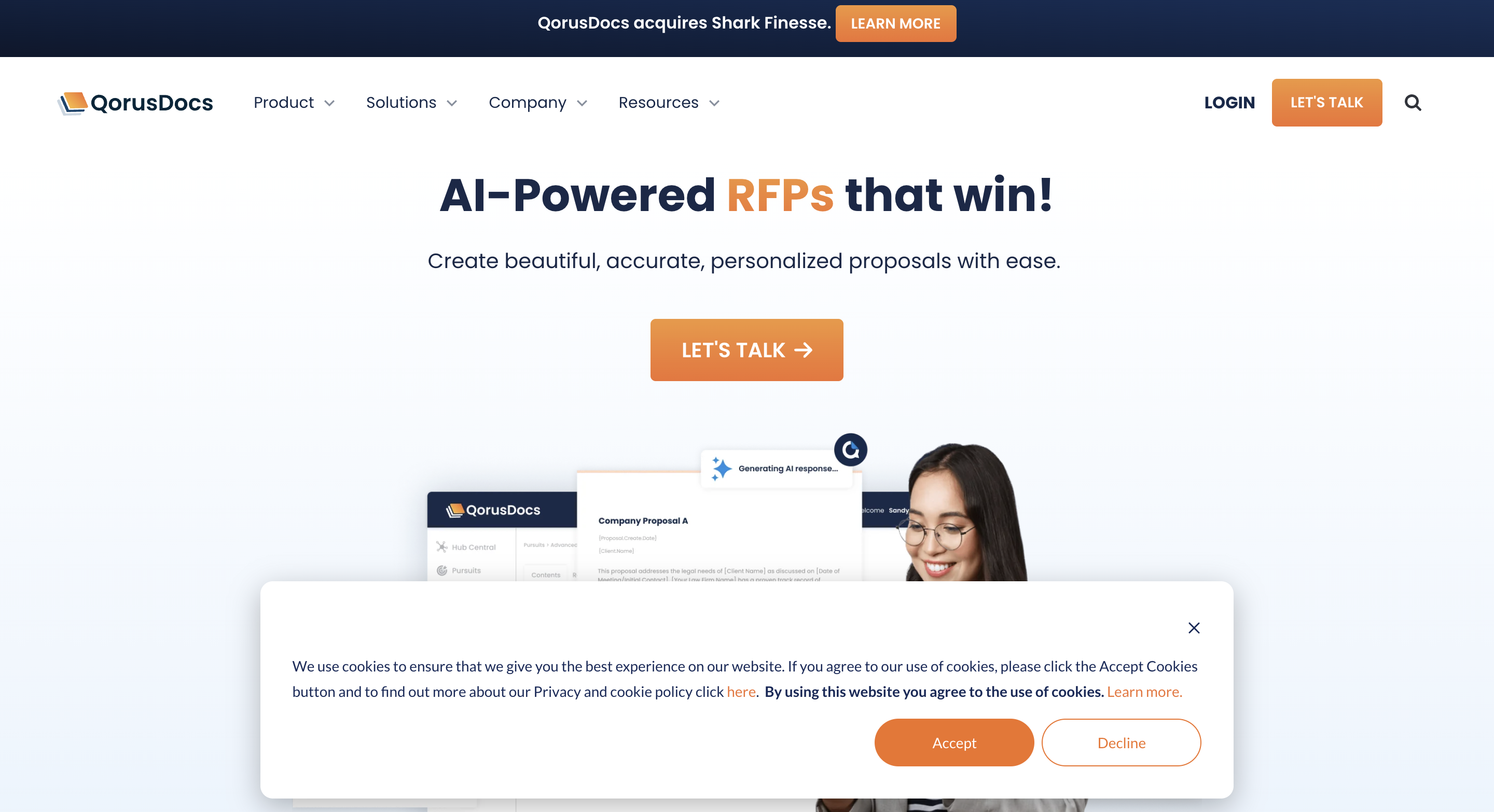
6. QorusDocs
Source: QorucDoc
G2 rating: 4.4/5
QorusDocs integrates proposal automation directly into Microsoft Word, PowerPoint, Outlook, and Teams.
Key capabilities
These capabilities are designed to embed proposal management directly within Microsoft 365 tools.
- Microsoft 365 native integration
- AI-assisted drafting
- Content library and templates
- SharePoint integration
- Proposal tracking
Together, they allow teams to work inside familiar applications without adopting a separate platform.
Where it stands out
Minimal context switching for Microsoft-first teams.
Pros
These strengths support smoother adoption and consistent proposal presentation.
- Familiar interface for users
- Reduces adoption friction
- Strong branding and templates
- Good for proposal-heavy orgs
Teams already comfortable with Microsoft 365 will see the most immediate benefits.
Cons
These limitations tend to surface as teams scale or push beyond basic proposal needs.
- UI can feel clunky
- Limited flexibility outside Microsoft ecosystem
- Slower to realize ROI
Organizations seeking flexibility or faster time-to-value may find these constraints limiting.
Best fit
Organizations deeply standardized on Microsoft 365 that want proposal automation without adopting a new interface.
7. Proposify
Source: Proposify
G2 rating: 4.6/5
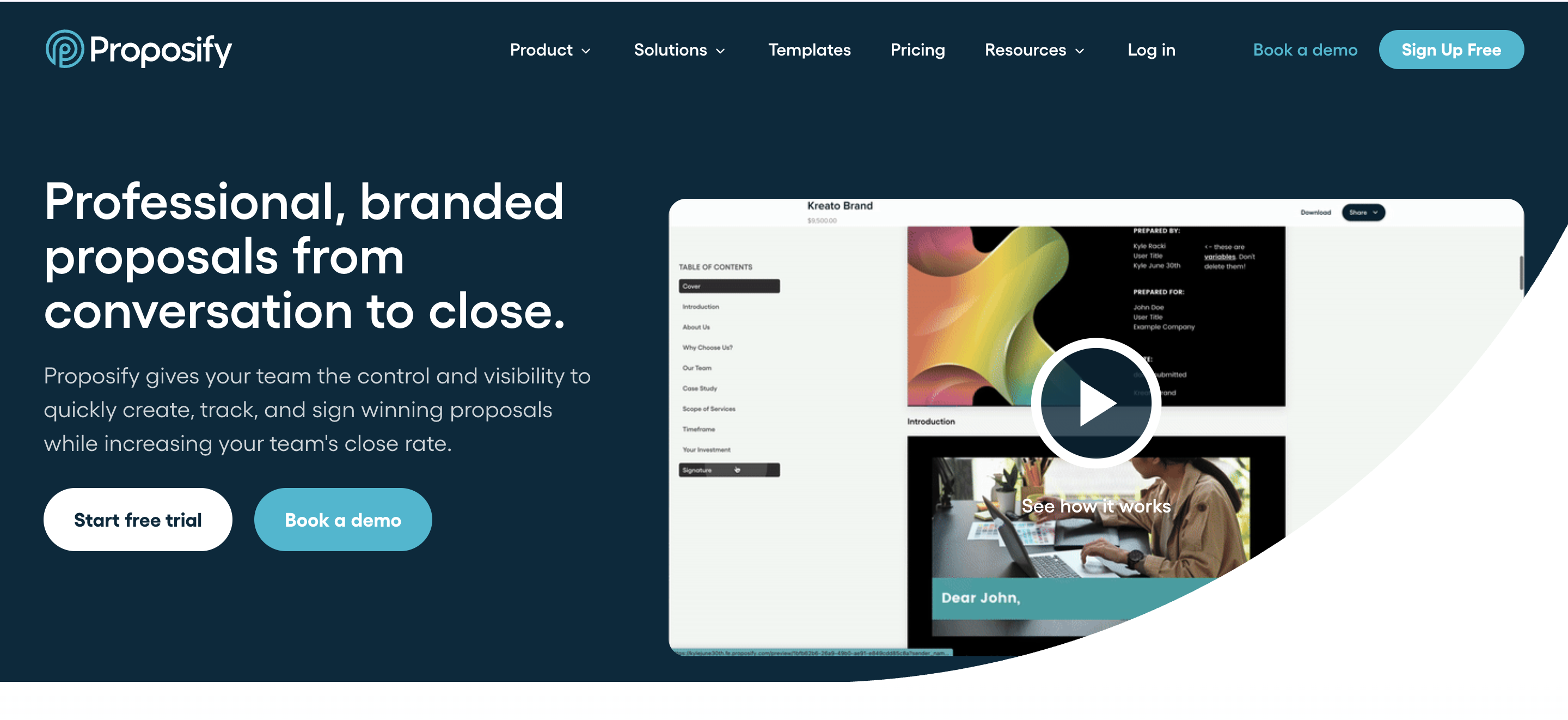
Proposify is a proposal-focused platform emphasizing visual presentation and engagement analytics.
Key capabilities
These capabilities focus on helping sales teams create and manage visually polished proposals.
- Drag-and-drop proposal builder
- Engagement tracking
- Interactive pricing
- CRM integrations
- Approval workflows
Together, they support faster proposal creation with built-in collaboration and tracking.
Where it stands out
Strong balance of design and tracking for sales proposals. This is where the platform differentiates itself within proposal-focused workflows.
Pros
These strengths make the platform approachable and efficient for everyday sales use.
- Clean UI
- Transparent pricing
- Easy collaboration
- Good analytics
Teams that value simplicity and visibility will benefit most from these advantages.
Cons
These limitations become more apparent as proposal complexity increases.
- Not suitable for complex RFPs
- Limited governance features
- Formatting quirks
Organizations with governance-heavy or RFP-driven workflows may outgrow the platform quickly.
Best fit
SMBs, agencies, and consultancies with proposal-centric sales motions.
8. AutoRFP.ai
Source: AutoRFP.ai
G2 rating: 4.9/5
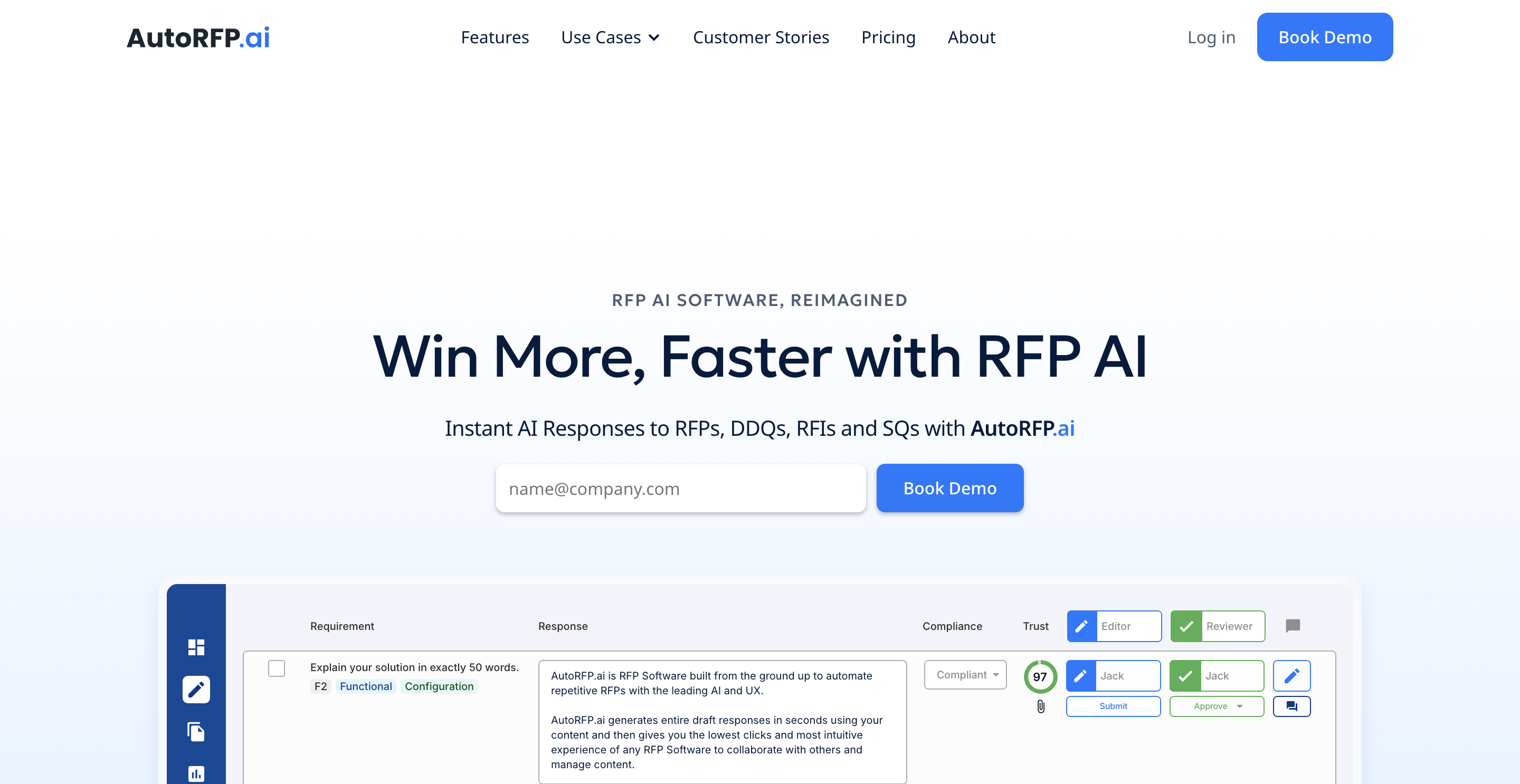
AutoRFP.ai is an AI-native RFP platform with usage-based pricing instead of per-seat licensing.
Key capabilities
These capabilities are designed to accelerate RFP drafting while removing collaboration constraints.
- AI-generated RFP drafts
- Unlimited users
- Multi-language support
- Real-time collaboration
- Project-based pricing
Together, they enable fast, inclusive participation across distributed proposal teams.
Where it stands out
Removes the cost penalty of adding SMEs and reviewers. This is the platform’s most meaningful differentiator in the Qvidian alternative landscape.
Pros
These strengths appeal to teams prioritizing speed, scale, and cost predictability.
- Predictable pricing
- Unlimited collaboration
- Fast AI drafting
- Global-ready
Growing organizations will find these advantages especially compelling.
Cons
These limitations reflect the trade-offs of a newer, fast-moving platform.
- Smaller market presence
- Less customization than enterprise tools
- Shorter track record
Enterprises with complex customization needs may require deeper evaluation.
Best fit
Growing teams are frustrated with seat-based pricing models.
9. Arphie
Source: Arphie
G2 rating: 4.9/5
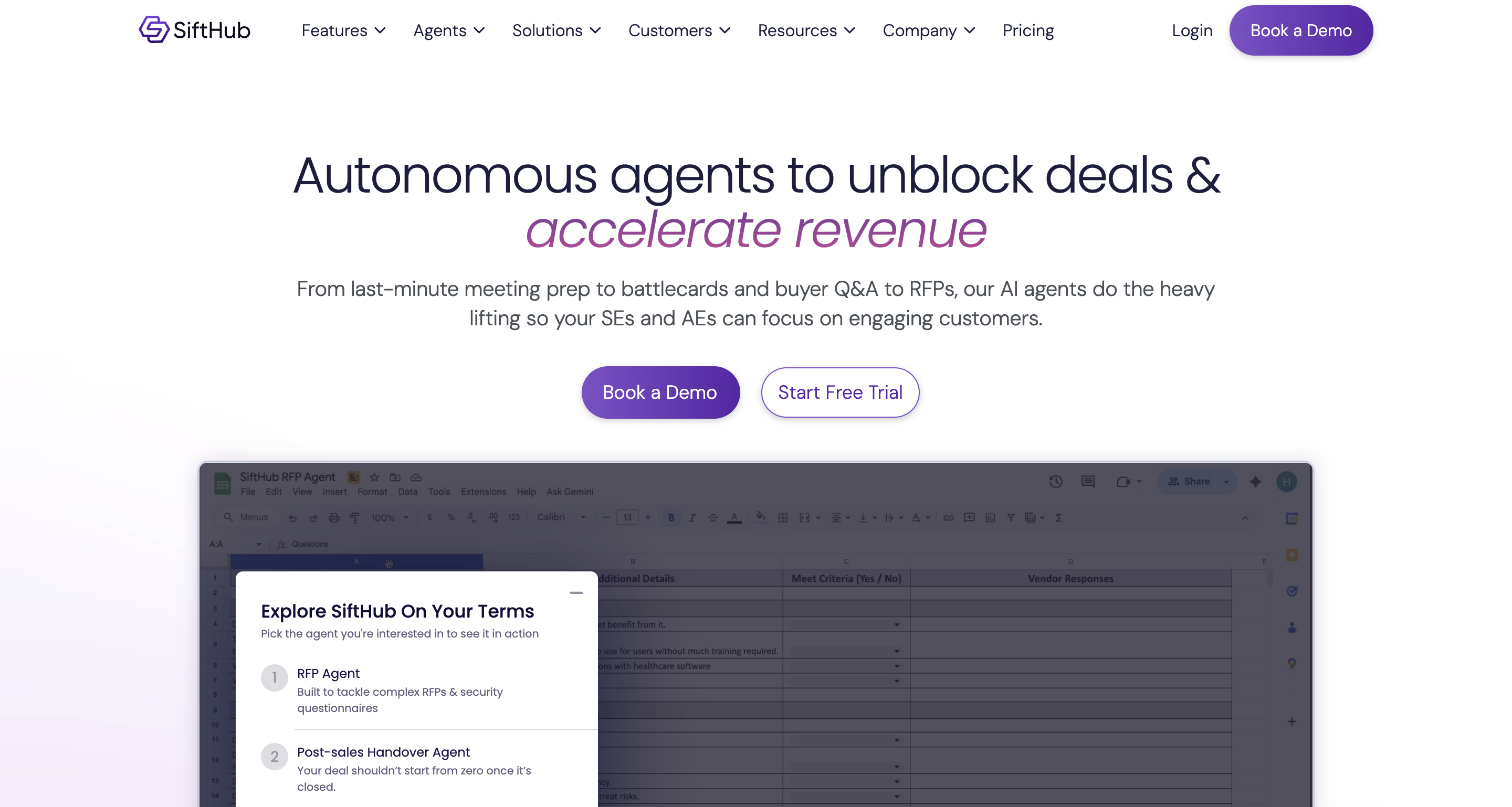
Arphie focuses on AI transparency, providing source citations and confidence scores for every answer.
Key capabilities
These capabilities focus on making AI-generated responses verifiable, reviewable, and easier to manage.
- Source-linked AI responses
- Confidence scoring
- Tone customization
- Deadline tracking
- Slack notifications
Together, they support accuracy, accountability, and smoother reviewer workflows.
Where it stands out
Trust and traceability in AI-generated content. This is the core area where the platform differentiates itself from other AI-driven tools. For risk-sensitive teams, this emphasis on trust can be a decisive factor.
Pros
These strengths highlight the platform’s focus on transparency and reviewer confidence.
- Strong AI transparency
- Reduces hallucination risk
- Great for audits and reviews
- Reviewer-friendly
Teams operating in compliance-heavy environments will benefit the most from these advantages.
Cons
These limitations are primarily related to maturity and ecosystem breadth.
- Custom pricing only
- Less polished UI
- Smaller ecosystem
Organizations seeking a highly polished, all-in-one platform may need to weigh these trade-offs carefully.
Best fit
Regulated industries where answer provenance matters.
Legacy RFP software feeling heavy?
Experience a faster, more transparent approach to proposal automation.
10. Inventive AI
Source: Inventive.ai
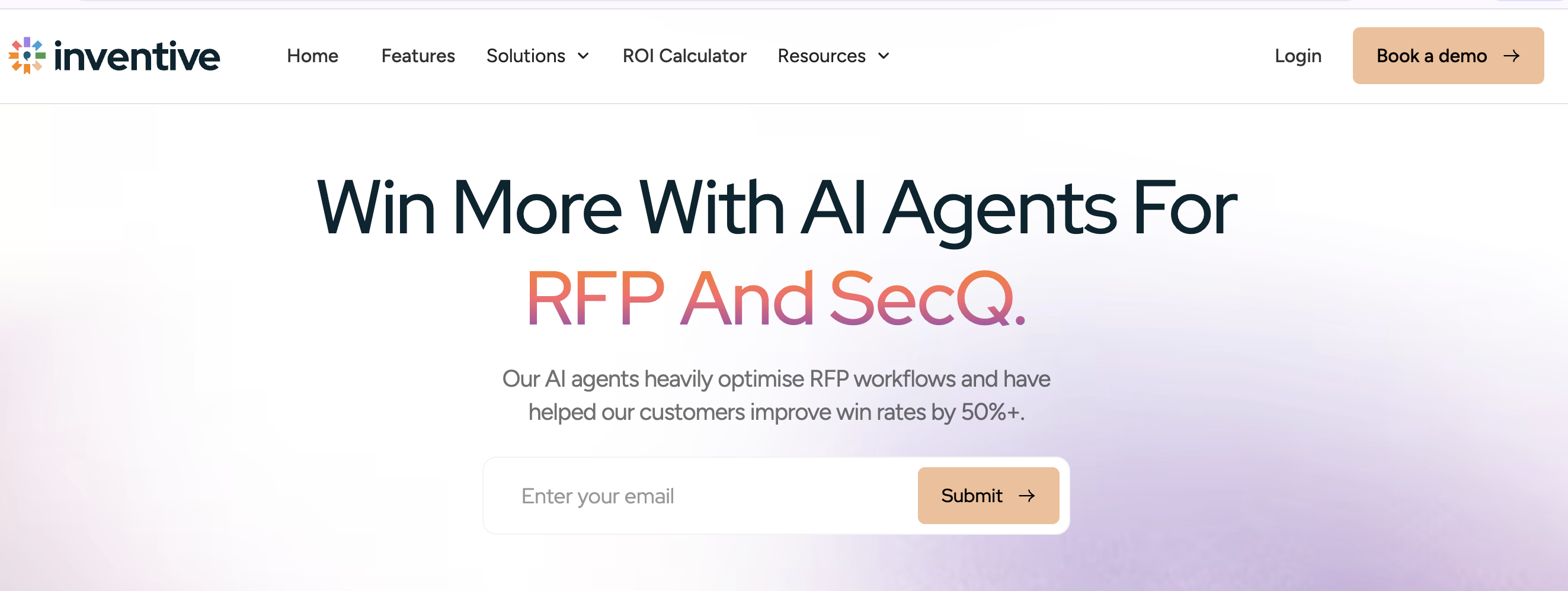
Inventive AI emphasizes content integrity, ensuring teams don’t submit outdated or conflicting answers.
Key capabilities
These capabilities focus on centralizing, validating, and governing large volumes of proposal content.
- Unified knowledge ingestion
- AI content conflict detection
- Sentence-level citations
- Competitive intelligence agents
- Knowledge chatbot
Together, they help teams maintain accuracy and consistency as knowledge bases scale.
Where it stands out
Maintains consistency across massive content libraries. For organizations managing vast content libraries, this consistency becomes a strategic advantage.
Pros
These strengths reflect the platform’s emphasis on content integrity and risk reduction.
- Excellent content quality control
- Strong citation model
- Scales with large knowledge bases
- Reduces risk
Teams with complex products or compliance demands will benefit most from these capabilities.
Cons
These limitations are most relevant for teams with lighter workflows or limited resources.
- Requires content discipline
- Custom pricing
- Overkill for small teams
Smaller teams may find the platform more complex than necessary for their needs.
G2 rating
4.9/5
Best fit
Enterprises struggling with content sprawl and inconsistency.
How to choose the right Qvidian alternative
Here’s the shortcut most buyers miss: there is no “best” tool in isolation. The right choice depends on what your team optimizes for day to day.
- If governance > speed
Choose SparrowGenie, Loopio or Responsive. These platforms are built for structured workflows, strict approvals, and audit-ready controls. You’ll trade some flexibility and speed for consistency and compliance. - If AI transparency > automation hype
Look at SparrowGenie or Arphie. Both focus on making AI outputs explainable through confidence scoring or source citations, so teams know what to trust and what to review. - If pricing flexibility > vendor legacy
SparrowGenie and AutoRFP.ai stands out with usage-based pricing and unlimited users, making it easier to collaborate without watching license counts or escalating costs. - If visual selling > RFP rigor
SparrowGenie, PandaDoc, or Proposify make sense when proposals are sales-driven, design-heavy, and focused on closing deals rather than navigating complex RFP requirements.
There’s no universal winner. The best Qvidian alternative is the one that matches how your team actually works, not how procurement thinks you should work.
Still comparing RFP tools?
See how modern teams answer complex RFPs in minutes, not days.
Final thoughts
The rise of AI, distributed deal teams, and tighter compliance expectations has reshaped what buyers expect from RFP software and proposal management tools. While Qvidian remains a solid legacy platform, today’s teams are increasingly exploring Qvidian alternatives that offer faster deployment, clearer AI transparency, flexible pricing, and better collaboration across sales, presales, legal, and security teams.
The reality is this: there is no single “best” RFP solution for everyone. Platforms like Loopio and Responsive excel in governance-heavy enterprise environments, while SparrowGenie, Arphie, and AutoRFP.ai reflect the next wave of AI-powered RFP automation software built for speed, trust, and modern workflows. Meanwhile, tools like PandaDoc and Proposify serve teams where proposal presentation and deal velocity matter more than formal RFP rigor.
Before switching, define what success looks like for your team - faster responses, lower risk, better win rates, or predictable costs and evaluate each Qvidian alternative against real RFP scenarios, not feature checklists. The right choice isn’t about replacing one tool with another; it’s about aligning your RFP response software with how your team actually wins deals today and how it plans to win tomorrow.
Ready to see how AI can transform your RFP process?
Product Marketer at SparrowGenie
Being a Product Marketer at SparrowGenie, Aparna helps sales teams work faster with secure, AI-powered proposal automation. She turns complex features into simple stories, builds messaging that resonates, and keeps a close pulse on what customers actually need. She loves shaping clear, helpful content that shows how SparrowGenie makes RFP work easier, faster, and a lot less stressful.
Frequently Asked Questions (FAQs)
Related Articles

How to Close Deals Faster with Document Generation Software

Content Libraries for Proposals: Your Edge for Consistent Wins