Sales Proposal Generator: From Manual Chaos to Automated Clarity

Article written by
Kate Williams

INSIDE THE ARTICLE
SHARE THIS ARTICLE
Summary
Manual proposals drain time, kill consistency, and delay deals. Modern proposal generators flip the script—turning last-minute requests into polished, personalized proposals in minutes. With intelligent content, error-free formatting, and real-time delivery, reps move faster, win more, and sell with confidence. It’s not just automation—it’s a competitive edge that turns proposals into revenue accelerators.
Nothing derails momentum faster than a prospect saying, “Send the proposal by EOD,” and you staring at a blinking cursor, juggling tabs, and rebuilding the same document you’ve already created a dozen times. Manual proposal work slows deals, drains energy, and leaves too much room for errors.
This blog cuts through the noise. You’ll learn what a sales proposal generator actually is, the benefits it brings, the features that matter, and how to evaluate the right one for your team.
Why Manual Proposal Generation Is Insane
Frankly, manually building proposals in 2025 is pure insanity. You’re juggling half a dozen tools just to assemble one document: pulling customer data from the CRM, copying pricing from Excel, searching old proposals for snippets that “sound right,” and formatting everything in Word or PowerPoint — while Slack is blowing up with last-minute edits from your manager.
Here’s why the old process doesn’t make sense anymore:
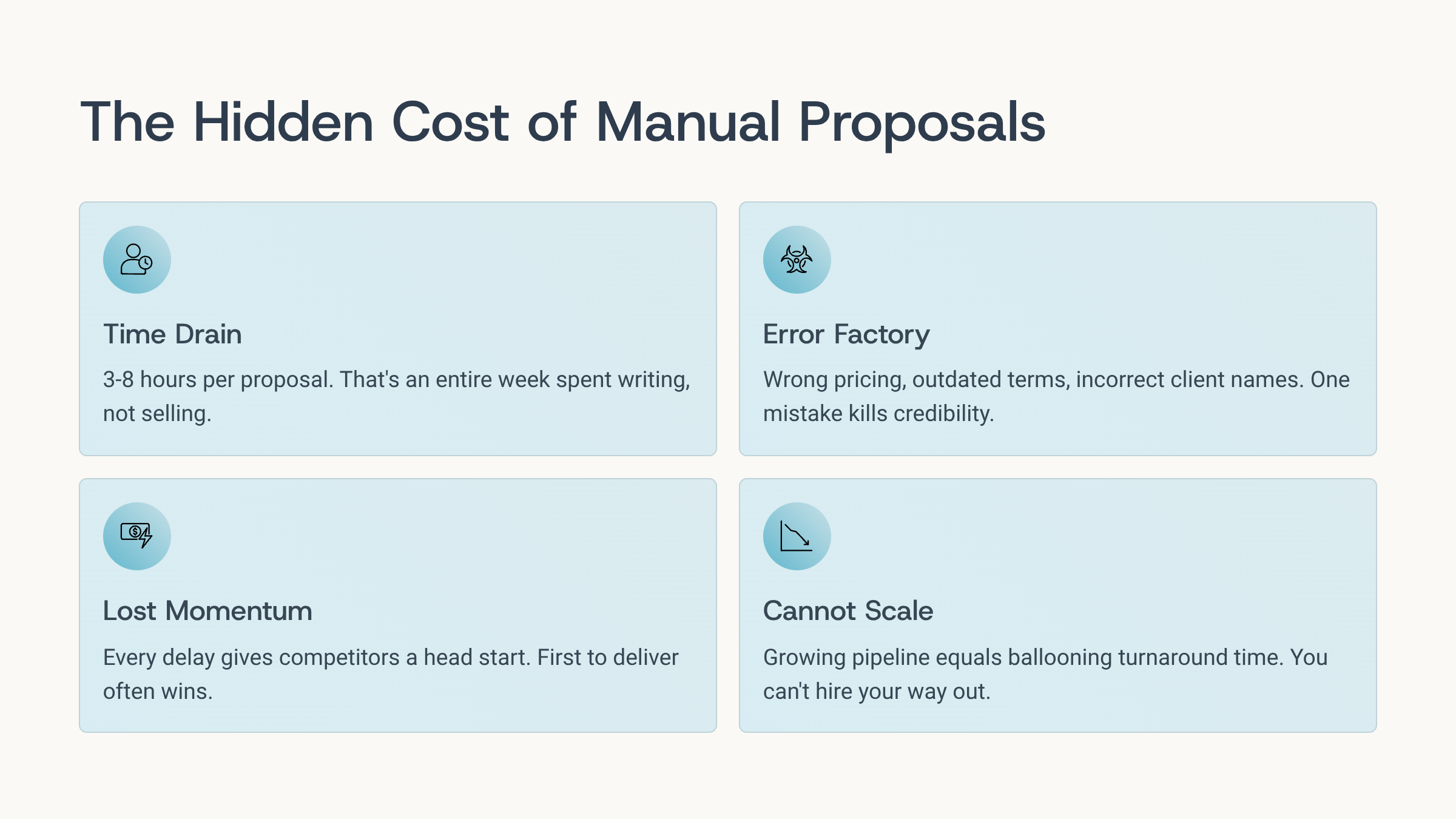
- It Devours Time: A single enterprise proposal can take anywhere from 3 to 8 hours to finalize. Multiply that by five active opportunities, and you’ve spent your entire week not selling — just writing. Sales reps should be in conversations, not templates.
- It’s a Breeding Ground for Errors: Copy-paste workflows are a recipe for mistakes — wrong pricing, outdated terms, mismatched fonts, even the wrong client name (yes, it happens). In high-stakes deals, a small oversight can instantly damage credibility.
- It Kills Momentum: Every hour lost in creation delays delivery. And every delay gives your competitor a head start. When buyers are evaluating multiple vendors, the first to send a polished, professional proposal often sets the tone for everyone else.
- It’s Impossible to Scale: Manual effort doesn’t scale. As your pipeline grows, proposal turnaround time balloons. You can’t hire your way out of that problem — you need automation.
- It’s Emotionally Draining: Sales teams burn hours on repetitive work that adds zero strategic value. That fatigue translates to slower responses, creative burnout, and lower morale.
Manual proposal generation isn’t just inefficient — it’s a systemic productivity drain. It slows deals, frustrates teams, and makes growth painful.
What Are Proposal Generation Softwares?
A proposal generation software is a platform that automates the creation, formatting, and delivery of sales proposals — turning what used to take hours into a few clicks.
In simple terms, it’s your digital proposal engine. Instead of manually stitching together documents, pricing tables, and design templates, proposal generation software pulls all the right data from your CRM, product catalog, and content repository to instantly create personalized, client-ready proposals.
Think of it as a fusion of:
- Content management: Access pre-approved messaging, case studies, and templates.
- Automation: Auto-fill client details, product specs, and pricing logic.
- Design intelligence: Maintain brand consistency in layout, tone, and visuals.
- Collaboration: Bring sales, legal, and finance together for real-time approvals.
- E-signature integration: Let clients review and sign proposals in one seamless flow.
The goal isn’t just to save time — it’s to make proposals smarter, faster, and scalable across teams. Whether you’re sending a single quote or managing dozens of enterprise RFPs, proposal generation software ensures your message stays accurate, on-brand, and deal-ready every single time.
What Modern Proposal Generators Actually Do
Modern proposal generators are far more intelligent — they behave like a digital sales assistant that understands your context, your buyer, and your business language. Instead of starting from scratch, they leverage AI, automation, and integrations to create proposals that are accurate, compliant, and personalized — in a fraction of the time.
Here’s what really happens behind the scenes:
- They Pull Context from Your CRM Automatically
The system connects with your CRM to extract deal details — client name, contact info, pricing tier, deal size, and meeting notes. That means zero manual entry, fewer typos, and instant personalization that reflects each prospect’s journey. - They Map Buyer Pain Points to Your Solutions
Using AI-driven logic, modern generators interpret meeting summaries or sales notes and align your product’s value propositions with the buyer’s pain points. The result? A proposal that feels written for them, not recycled from a previous client. - They Auto-Build Structured, Branded Content
The generator inserts the right sections — executive summary, objectives, deliverables, pricing tables, and timelines — in a layout that’s already on-brand. Every proposal carries your logo, colors, fonts, disclaimers, and legal terms automatically. No more formatting battles or version mismatches. - They Apply Dynamic Pricing and Configurations
Whether you sell tiered plans, multi-seat licenses, or project-based services, AI-driven pricing logic calculates totals, discounts, and renewals in seconds. It eliminates manual math errors and ensures every number is review-ready before approval. - They Enable Real-Time Collaboration and Approval
Modern platforms let sales, finance, and legal teams collaborate in one workspace. Changes are tracked in real-time, version control is automatic, and approvals move faster — without endless email threads. - They Integrate Seamlessly with E-Signature Tools
The moment the proposal is ready, it’s converted into a client-facing link or PDF. E-signature integrations let buyers sign instantly — cutting deal cycles from days to hours. - They Provide Insights You Can Act On
Advanced proposal systems track when clients open the file, how long they spend on each section, and when they forward it internally. This engagement data helps reps follow up with perfect timing and higher confidence.
Essentially, modern proposal generators don’t just “automate documents” — they automate momentum. They remove friction from every stage of the proposal process, giving sales teams time to do what they do best: build relationships, negotiate value, and close deals.
7 Key Benefits of Proposal Generators
When proposals go out faster, cleaner, and more consistent, the entire revenue engine benefits.
Here’s how automation transforms proposal creation into a competitive edge:
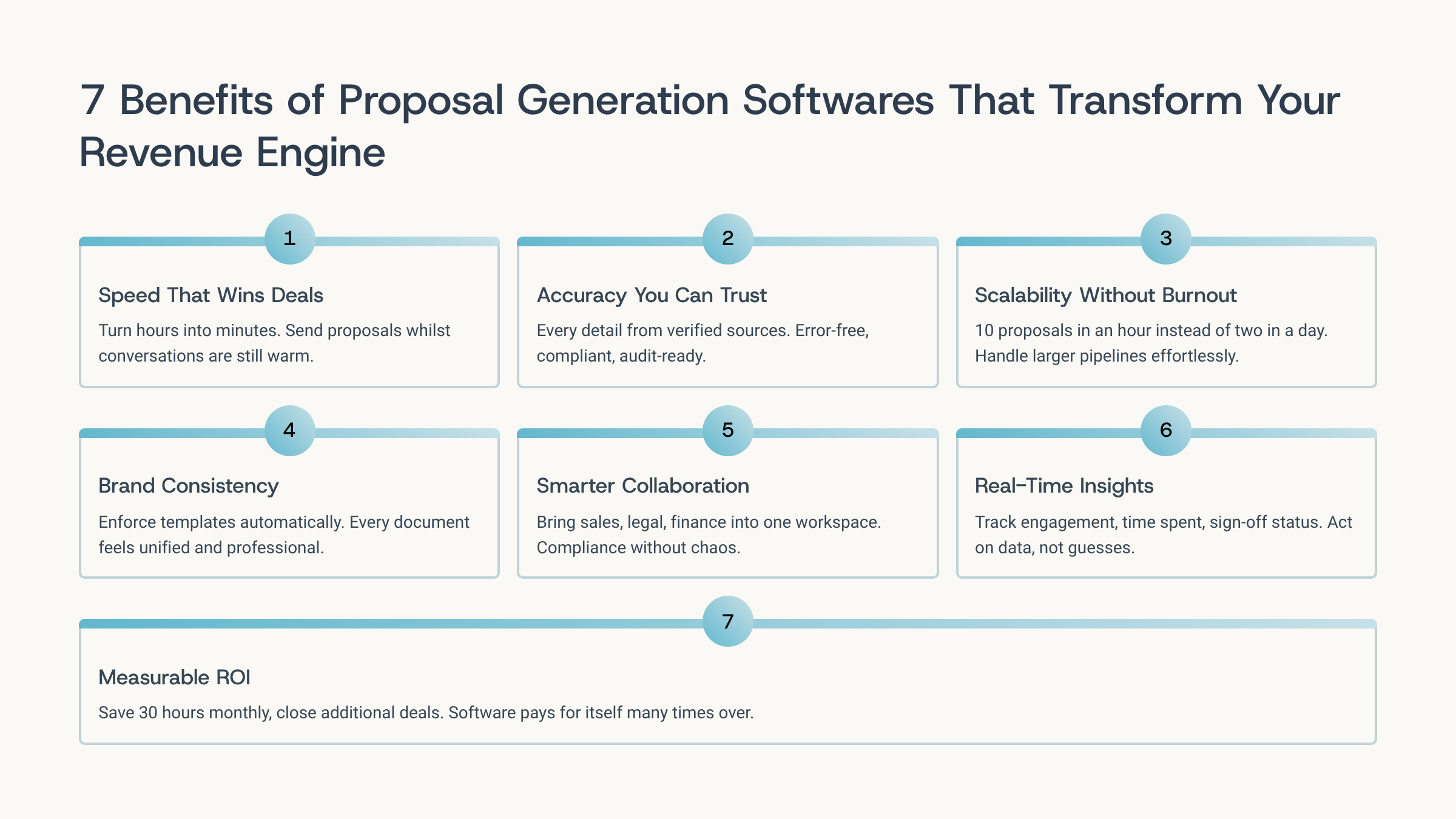
1. Speed That Wins Deals
In sales, timing is everything. Automated proposal generation turns hours of manual work into minutes. Instead of juggling Word docs, Excel sheets, and PowerPoint decks, reps can send a polished, personalized proposal right after a client call — while the conversation is still warm. Faster delivery means fewer lost deals and more signed contracts.
2. Accuracy You Can Trust
Manual data entry breeds errors — misplaced commas, outdated pricing, and mismatched clauses. With automation, every detail pulls from verified data sources: your CRM, product catalog, and approved templates. That ensures proposals are error-free, compliant, and audit-ready every single time.
3. Scalability Without Burnout
A single rep can now send 10 proposals in an hour instead of two in a day. This scalability isn’t about cutting corners — it’s about enabling high-performing teams to handle larger pipelines without compromising quality or consistency.
4. Brand Consistency at Every Touchpoint
No more off-brand fonts, missing logos, or inconsistent messaging. Proposal generation software enforces brand templates and tone automatically, ensuring every document feels unified, professional, and aligned with your company’s voice.
5. Smarter Collaboration and Compliance
Sales, legal, and finance often work in silos — creating bottlenecks. Automated workflows bring everyone into a single workspace with version control, tracked approvals, and role-based access. It’s compliance without chaos — every stakeholder sees exactly what they need, when they need it.
6. Real-Time Visibility and Insights
The moment a client opens a proposal, you know. Modern systems track engagement — time spent on pages, sections viewed, and sign-off status — helping reps prioritize follow-ups based on actual buyer intent. You’re not guessing anymore; you’re acting on data.
7. Measurable ROI
The math is simple: If a rep saves 30 hours a month and closes even one additional deal due to faster turnaround, the software pays for itself many times over. Less time writing, more time selling — that’s real revenue impact.
Proposal generation isn’t just about efficiency — it’s about creating velocity across the entire sales cycle. It gives reps back their time, ensures accuracy, and keeps deals moving through clean, compliant, and consistent communication.
10 Features to Look for in Your Proposal Generation Software
Not all proposal tools are created equal. Some focus on design, others on content management — but the best proposal generation software combines automation, intelligence, and governance into one unified system.
When you’re evaluating your next platform, here are the key features that truly matter:
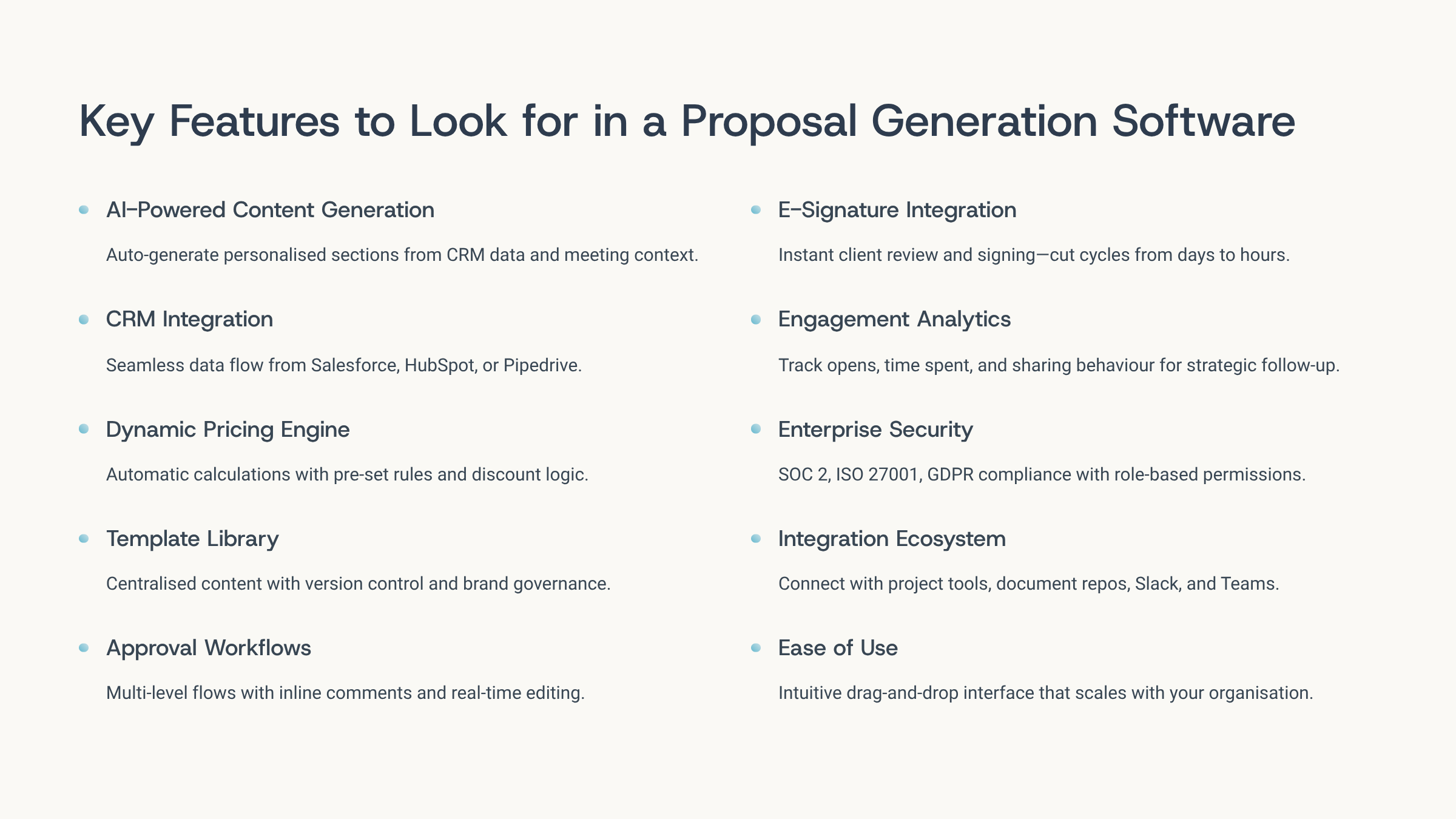
1. AI-Powered Content Generation
A modern proposal tool should go beyond static templates. AI-powered engines can interpret CRM data, meeting notes, and past deal context to automatically generate proposal sections — like executive summaries, pain-point narratives, and solution overviews. It ensures every proposal is not only fast but also deeply personalized and relevant.
2. CRM and Deal System Integration
The best systems connect directly with your CRM — Salesforce, HubSpot, Pipedrive, or any other. This allows deal details, client data, and contact information to flow seamlessly into proposals without manual re-entry. When your proposal generator syncs with the tools your reps already use, adoption skyrockets and human errors disappear.
3. Dynamic Pricing and Configurable Quotes
Pricing errors can derail even the strongest deals. A dynamic pricing engine calculates totals, discounts, and renewals automatically based on pre-set rules. It ensures accuracy, accelerates approvals, and gives reps flexibility to generate quotes that align perfectly with buyer needs — without breaking compliance.
4. Template Library and Brand Governance
Your brand voice should be consistent across every proposal. Look for a tool with a centralized content library where teams can store and reuse templates, case studies, and messaging blocks — all under version control. This keeps your output clean, compliant, and instantly recognizable.
5. Collaboration and Approval Workflows
Sales proposals aren’t created in isolation. Legal, finance, and leadership all have a role. The right software supports multi-level approval flows, inline comments, and real-time editing — so proposals move from draft to delivery without bottlenecks or email chaos.
6. Seamless E-Signature Integration
Once the proposal is ready, signing should be effortless. Integrations with e-signature tools ensure clients can review, sign, and return documents instantly — cutting deal cycles from days to hours. No attachments, no printing, no friction.
7. Analytics and Engagement Insights
Visibility drives better selling. Top platforms provide real-time analytics showing when clients open proposals, how long they spend on each section, and who they share it with. This data helps sales reps follow up at the right time with the right context — turning guesswork into strategy.
8. Enterprise-Grade Security and Compliance
Sales proposals often contain sensitive pricing and legal details. Choose software that meets industry standards like SOC 2, ISO 27001, and GDPR. Look for role-based permissions, audit logs, and encrypted storage — especially if you’re dealing with enterprise or regulated clients.
9. Integration Ecosystem
Your proposal generator should fit into your broader tech stack — not fight it. Check for integrations with project management tools, document repositories, and communication platforms like Slack or Teams. That interconnectedness ensures your entire workflow stays automated from prospecting to post-sale.
10. Ease of Use and Scalability
Finally, great software is the one your team actually uses. It should feel intuitive, not technical. Drag-and-drop templates, guided setup, and easy onboarding ensure that even non-technical reps can generate complex proposals in minutes. And as your organization grows, it should scale without slowing down or adding unnecessary complexity.
The ideal proposal generation software doesn’t just create documents — it creates momentum. It combines automation, intelligence, and security to eliminate chaos, shorten approval cycles, and deliver consistent, client-ready proposals every time.
When evaluating tools, look for one that aligns with how your sales team actually works — not how the software wants them to work.
How to Evaluate a Proposal Generation Software
Choosing the right tool depends on your team’s workflow, deal volume, and compliance needs. Here’s a framework to simplify the decision:
- Define Your Use Case: Are you handling enterprise proposals, high-volume SMB deals, or custom service quotes?
- Test Workflow Fit: Does it integrate with your existing CRM, file storage, and signature tools?
- Check for Automation Depth: Does it go beyond templates to auto-fill data, calculate pricing, and personalize content?
- Assess Ease of Use: A good system should help reps — not add another layer of complexity.
- Evaluate Security: Ensure encryption, role-based access, and compliance certifications meet enterprise standards.
- Review ROI: Compare time saved and deals accelerated versus software cost. The best tools pay for themselves in months.
When in doubt, pilot the software with a small team. The results will speak for themselves.
Automated Proposal Generation with SparrowGenie
Manual proposal creation drains time, consistency, and momentum. SparrowGenie fixes that with secure, AI-powered proposal generation that turns meeting notes and CRM data into polished, branded proposals in minutes. It automatically pulls verified content, applies pricing logic, and maintains compliance—ensuring every proposal is accurate, audit-ready, and client-ready from the start.
By unifying automation, collaboration, and governance, SparrowGenie helps sales, legal, and finance teams move faster without losing control. Every proposal is tracked, versioned, and backed by enterprise-grade security. It leads to shorter cycles, stronger alignment, and higher win rates.
Conclusion
Sales proposal generators transform what used to be an administrative nightmare into a seamless, data-driven, and client-ready experience. They don’t replace your team’s creativity, but amplify it. No more blank-page panic. No more chasing approvals. Just faster, smarter, and more secure proposals that help you close deals confidently.
In a world where speed defines success, the teams that automate win first.
SparrowGenie helps you do exactly that by unifying your data, automating the busywork, and turning every proposal into a winning one.
Ready to see how AI can transform your RFP process?
Product Marketing Manager at SurveySparrow
A writer by heart, and a marketer by trade with a passion to excel! I strive by the motto "Something New, Everyday"
Frequently Asked Questions (FAQs)
Related Articles

15+ Best RFP Response Software Tools in 2026 - Expert Reviews